
KEY HIGHLIGHTS
- Cash top-ups made in 2025 can reduce your tax bill for YA2026
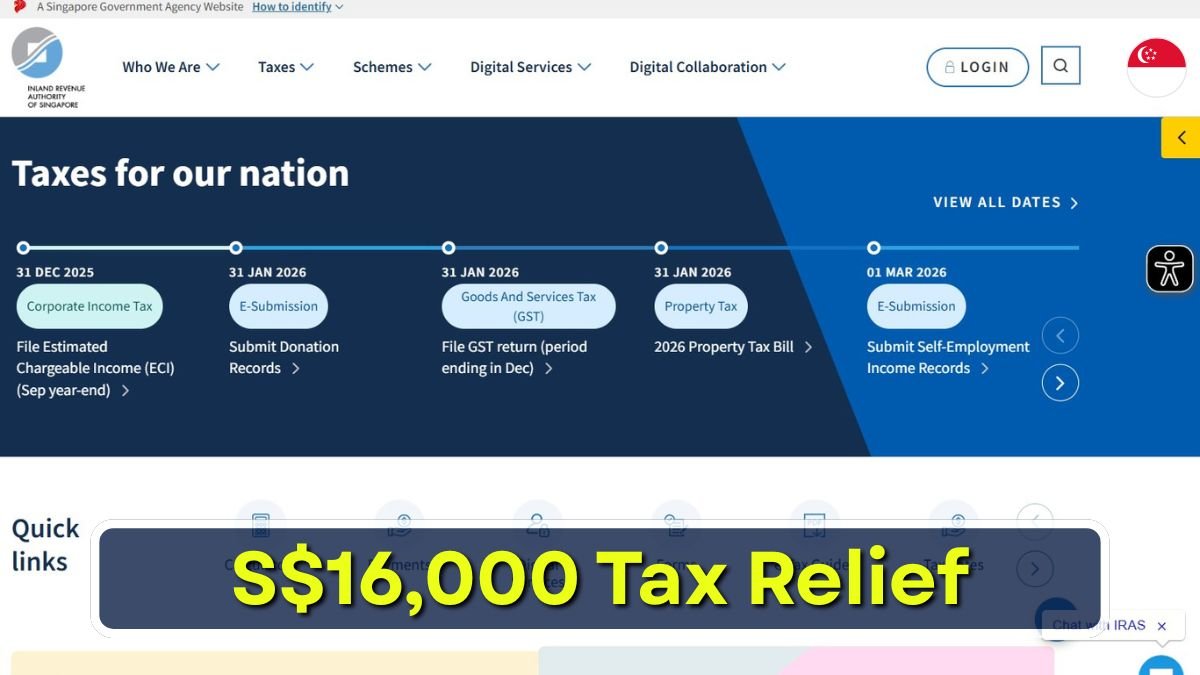
- Up to S$16,000 total tax relief if you top up yourself and family
- MRSS-matched portions do not qualify — planning matters
Trying to save tax and build retirement funds at the same time? CPF Cash Top-Up Tax Relief is one of the few legal ways in Singapore to do both — but only if you understand the limits properly.
For YA2026, the rules are mostly familiar, but there are still traps that can cause you to lose tax relief if you’re not careful. Especially if you’re topping up elderly parents or planning around matching grants.
Let’s break it down clearly, without the CPF jargon.
What exactly is CPF Cash Top-Up Tax Relief?
This tax relief applies when Singapore Citizens or PRs make cash top-ups to CPF accounts — either their own or eligible family members’. The relief reduces your chargeable income, which means lower income tax payable.
Only cash counts. CPF transfers (like OA to SA) don’t qualify, no matter how logical they seem.
Deadline that matters for YA2026
To qualify for YA2026, your cash top-up must be received by CPF between 1 Jan 2025 and 31 Dec 2025. Miss the year-end cut-off and the relief is gone.
CPF data is sent directly to IRAS, so most people don’t need to manually claim — but timing is everything.
| Item | Key Detail |
|---|---|
| Top-up period | 1 Jan 2025 – 31 Dec 2025 |
| Tax assessment year | YA2026 |
| Maximum relief (self) | S$8,000 |
| Maximum relief (family) | S$8,000 |
| Combined annual cap | S$16,000 |
| Eligible top-ups | Cash only |
| MRSS-matched amount | ❌ Not tax-reliefable |
Who is eligible for the relief?
You (the giver)
You must be a Singapore Citizen or Permanent Resident making a cash top-up.
The recipient
You can top up:

- Yourself
- Parents / parents-in-law
- Grandparents / grandparents-in-law
- Spouse
- Siblings
For spouse and siblings, their annual income in the year before the top-up must not exceed S$8,000 (this threshold applies from YA2025 onwards). This income test does not apply if the recipient has a disability.
If you’re self-employed and topping up someone else’s MediSave, make sure your own MediSave contributions are fully paid up — otherwise, the relief may be denied.
How much tax relief can you actually get?
Here’s the part many people misunderstand.
You can claim:
- Up to S$8,000 for topping up your own CPF accounts
- Up to S$8,000 total for topping up all eligible family members combined
That’s a maximum of S$16,000 per calendar year, but only if all conditions are met.
Important caps that reduce your relief
Recipient CPF limits matter.
If the person you’re topping up has already reached the applicable Retirement Sum or account cap, any excess won’t qualify — even if CPF accepts the money.
MRSS conflict is real.
If your top-up attracts the Matched Retirement Savings Scheme (MRSS), the portion that receives the government match does not qualify for tax relief. In many cases, the first S$2,000 is excluded.
If tax savings are your priority, you’ll need to plan your top-up amount carefully.
Simple example
You top up S$10,000 to your own SA in 2025.
Only S$8,000 qualifies for tax relief due to the cap.

You also top up S$8,000 across eligible family members, with no MRSS involved.
Total tax relief for YA2026 = S$16,000.
How to make a CPF cash top-up properly
First, check limits using CPF’s Retirement Dashboard. This avoids topping up amounts that won’t earn interest or tax relief.
Next, log in to My CPF and select Cash Top-Up under “Cash Top-Up and CPF Transfers”. You can top up:
- Special Account (SA)
- Retirement Account (RA)
- MediSave Account (MA)
Always complete the transaction before 31 Dec 2025. CPF must receive it by that date — initiating on the last day but missing processing can cost you the relief.
Do you need to submit a tax claim?
For most people, no manual claim is required. CPF sends the records directly to IRAS, and the relief should appear automatically in your YA2026 Notice of Assessment.
That said, always double-check your tax bill. If something looks wrong, raise it early with CPF or IRAS and keep proof of payment.
Common mistakes Singaporeans still make
Confusing MRSS with tax relief
Matching grants feel great, but they don’t reduce your taxable income. Decide what you value more.
Ignoring spouse or sibling income limits
That S$8,000 threshold catches many people off guard.
Waiting until December
Early top-ups earn more CPF interest. Waiting till year-end means lost compounding — not worth it.
Frequently Asked Questions
If I top up in December 2025, will I still get YA2026 relief?
Yes. As long as CPF receives the cash top-up by 31 Dec 2025, it will count towards YA2026.
Do CPF transfers between my own accounts qualify?
No. Only cash top-ups qualify. OA-to-SA or other CPF transfers do not count.
Does my employer’s CPF contribution qualify?
No. Employer CPF contributions are treated as employment income and are not eligible for this relief.
Final checklist for YA2026 tax planning
Decide early whether your goal is tax savings or matching grants — they don’t stack.
Check recipient limits before topping up to avoid wasted cash.
Make your top-ups before 31 Dec 2025, keep records, and always verify your YA2026 Notice of Assessment.
If done right, CPF Cash Top-Up Tax Relief remains one of the simplest tax moves Singaporeans can still use — no loopholes, no stress.
Where to read official details (useful links)
(Official pages I used to prepare this guide)
- IRAS — CPF Cash Top-up Relief (detailed rules, qualifying conditions, automatic claims). Default
- CPF Board — Cash top-ups & MRSS / Top-up how-to (Retirement Dashboard, matching grants, top-up flows). Central Provident Fund+1
- IRAS PDF on CPF Cash Top-Up Relief (clarifies income thresholds, caps and deadlines). Default

 Join
Join