
KEY HIGHLIGHTS
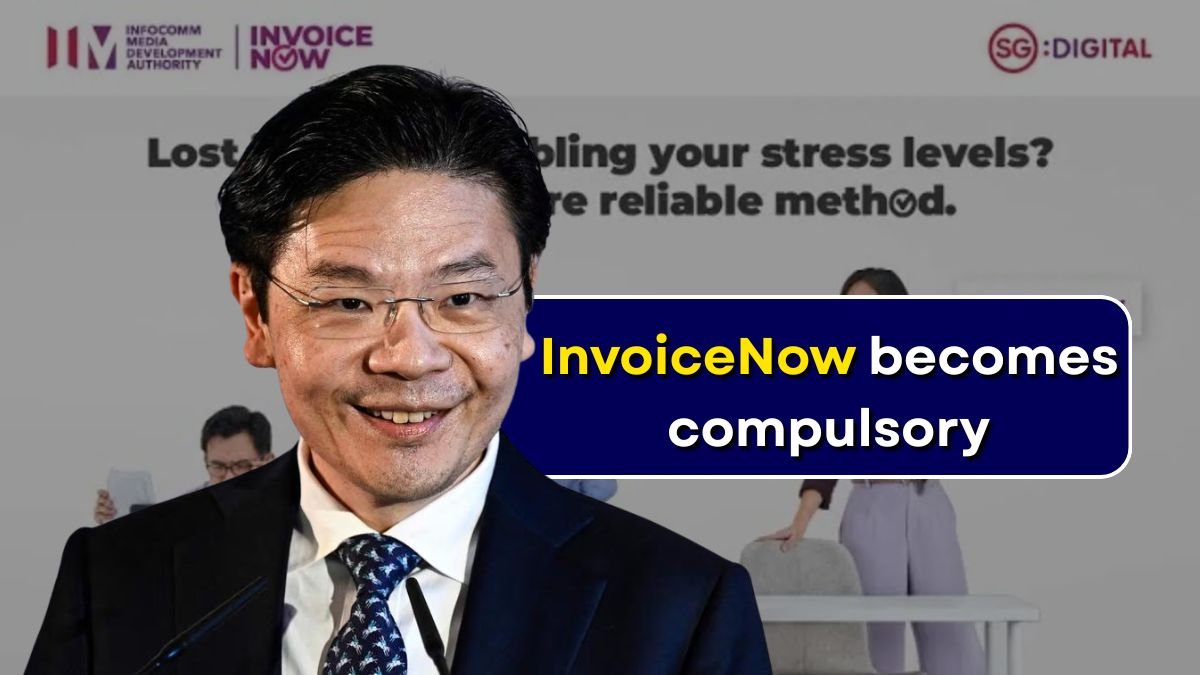
- InvoiceNow becomes compulsory for new GST-registered businesses from 1 April 2026.
- Firms that ignore the rule risk GST de-registration, fines, and rejected GST claims.
- Early setup is low-cost or free for most SMEs — no need expensive systems.
Most Singapore SMEs still send invoices the familiar way: PDFs over email, WhatsApp screenshots, sometimes even paper. It works… until payments are delayed or someone says, “Eh, never receive your invoice leh.”
That’s about to stop.
From 2026, Singapore is moving GST-registered businesses towards InvoiceNow, a nationwide digital invoicing system that sends invoice data directly between accounting systems. No manual typing. No missing attachments. No excuses.
What InvoiceNow Means for Everyday Businesses
InvoiceNow isn’t just another optional tech tool. It’s a government-backed standard that changes how GST invoices are issued, received, and tracked.
Instead of emailing a PDF, your invoice data goes straight from your system into your customer’s accounting software. Whether you’re a Jurong East contractor or a Woodlands tuition centre, the workflow becomes faster and cleaner.
And yes — PDFs do NOT count as e-invoicing.
Key InvoiceNow Dates Every GST Business Must Know
| Date | Who Is Affected | What Changes |
|---|---|---|
| 1 May 2025 | All GST-registered businesses | Early adoption encouraged (not compulsory yet) |
| 1 Nov 2025 | Newly voluntary GST registrants | InvoiceNow required as a condition of registration |
| 1 Apr 2026 | All new GST registrants | Mandatory machine-to-machine invoicing |
| Future (TBC) | Existing GST businesses | Expected to become standard for tax reporting |
What InvoiceNow Actually Is (And Why PDFs Don’t Qualify)
Many business owners assume emailing a PDF is already “digital enough.” Honestly speaking, it’s not.
A PDF still needs someone on the other end to open it and manually key in the numbers. That’s slow, error-prone, and hard for audits.
InvoiceNow runs on the Peppol network, a global standard that allows accounting systems to communicate directly. Your invoice appears instantly in your customer’s system — already filled in, already recorded.
Example:
You invoice from Xero. Your customer uses SAP. Doesn’t matter. The data moves safely between systems without human input.
That’s exactly why authorities are pushing this hard.
Why the Government Is Firm About InvoiceNow
Many SMEs worry this adds more compliance work. But once you look at the reasons, it’s quite straightforward.
Stronger Protection Against GST Fraud
Fake invoices and missing trader scams cost Singapore millions. InvoiceNow allows near real-time verification, making fraudulent GST claims much harder to pull off.
Faster Payments for SMEs
Invoices don’t get buried in inboxes or spam folders. They land straight into finance systems, which speeds up approval and payment cycles.
For cash-flow-tight SMEs, this matters.
Lower Admin Costs
Manual invoicing can cost S$10–S$20 per invoice in manpower time. InvoiceNow reduces that to cents. Over a year, that’s real savings — especially for firms sending dozens of invoices monthly.
Mandatory Timeline: What You Cannot Ignore
1 May 2025 — Early Adoption Phase
Still optional, but encouraged. Businesses that onboard early usually face fewer issues later and transition more smoothly.
1 Nov 2025 — Voluntary GST Registrants
If you voluntarily register for GST on or after this date, InvoiceNow becomes compulsory. No InvoiceNow, no GST status.
1 Apr 2026 — All New GST Registrants
Whether compulsory or voluntary registration, InvoiceNow is mandatory. No negotiation.
Existing GST Businesses
Authorities have already signalled this will expand to everyone in future phases as part of tax administration requirements. It’s not a matter of if, but when.
How to Set Up InvoiceNow Without Spending a Bomb
Good news: you don’t need enterprise software.
Option 1: Free Solutions (Low Invoice Volume)
If you issue fewer than 10 invoices a month, IMDA-approved free portals are enough.

Basic steps:
- Choose an approved free provider
- Log in using CorpPass
- Verify your UEN
- Start sending invoices
Simple and cost-effective.
Option 2: Existing Accounting Software
Already using Xero, QuickBooks, ABSS, or Deskera? You’re likely ready.
Setup usually takes under 10 minutes:
- Enable Peppol / e-invoicing
- Authenticate via CorpPass
- Receive your Peppol ID
That’s it.
Option 3: Government Support
Need upgrades?
- Productivity Solutions Grant (PSG) — up to 50% support
- LEAP Programme — for more complex digital projects
No need to overthink. Plenty of support available.
What Happens If You Ignore the Rules?
This is where it gets serious.
Risk of GST De-Registration
From 1 Nov 2025, InvoiceNow is a condition of GST registration. Fail to comply, and IRAS can cancel your GST number.
If your turnover exceeds S$1 million, operating without GST registration is an offence.
Financial Penalties
Under the GST Act:

- Fines up to S$5,000
- Up to 6 months’ imprisonment (or both)
- Possible rejection of GST input tax claims
If IRAS can’t verify your invoices, refunds may be denied.
Higher Audit Risk
Manual or PDF-heavy workflows increase audit complexity. InvoiceNow creates a clean, traceable digital trail — lowering your risk profile.
Simple Checklist for SME Owners
- Confirm your accounting software is Peppol-ready
- Register early and obtain your Peppol ID
- Send a test invoice (even S$1 is fine)
- Start collecting customers’ Peppol IDs
Small steps now prevent big problems later.
Worth It or Not?
For most Singapore businesses, InvoiceNow isn’t just compliance. It saves time, reduces errors, and improves cash flow.
Once you try it, you’ll probably wonder why invoicing was ever done any other way.
The paper-and-PDF era is ending. Better to be ready early than rush later.
Frequently Asked Questions
Is InvoiceNow compulsory for all GST businesses now?
No. It becomes mandatory for new GST registrants from 1 April 2026. Existing businesses are expected to follow in future phases.
Can I still email PDF invoices?
You can send PDFs, but they do not count as InvoiceNow e-invoices for GST compliance purposes.
Is InvoiceNow expensive for small businesses?
No. Many free or low-cost options exist, and government grants can cover up to 50% of software costs.
Useful Government Links for Verification:
- IMDA InvoiceNow Main Page: https://www.imda.gov.sg/invoicenow
- IRAS InvoiceNow Requirement: https://www.iras.gov.sg/taxes/goods-services-tax-(gst)/getting-it-right/invoicenow
- Peppol Directory (Find your partners): https://www.peppoldirectory.sg/
(Disclaimer: This article provides general information and does not constitute legal or tax advice. Please consult with a qualified accountant or refer to the latest updates on the IRAS/IMDA websites.)

 Join
Join