
KEY HIGHLIGHTS
- GST Voucher 2026 brings stronger cost-of-living support for selected Singapore households
- Lower-income adults and seniors see higher effective payouts compared to 2025
- Cash, MediSave, and U-Save benefits are more tightly targeted to inflation impact
Groceries, utilities, healthcare, even hawker meals — all creeping up. For many Singaporeans, the question isn’t luxury spending anymore, but how to manage daily essentials without feeling squeezed every month.
That’s where GST Voucher 2026 comes in. Building on last year’s measures, the Government is refining the scheme again — with higher payouts for selected groups, sharper targeting, and stronger cost-of-living relief where it matters most.
Here’s a clear breakdown of what’s new, what’s different from GST Voucher 2025, and whether it actually makes a difference for your household.
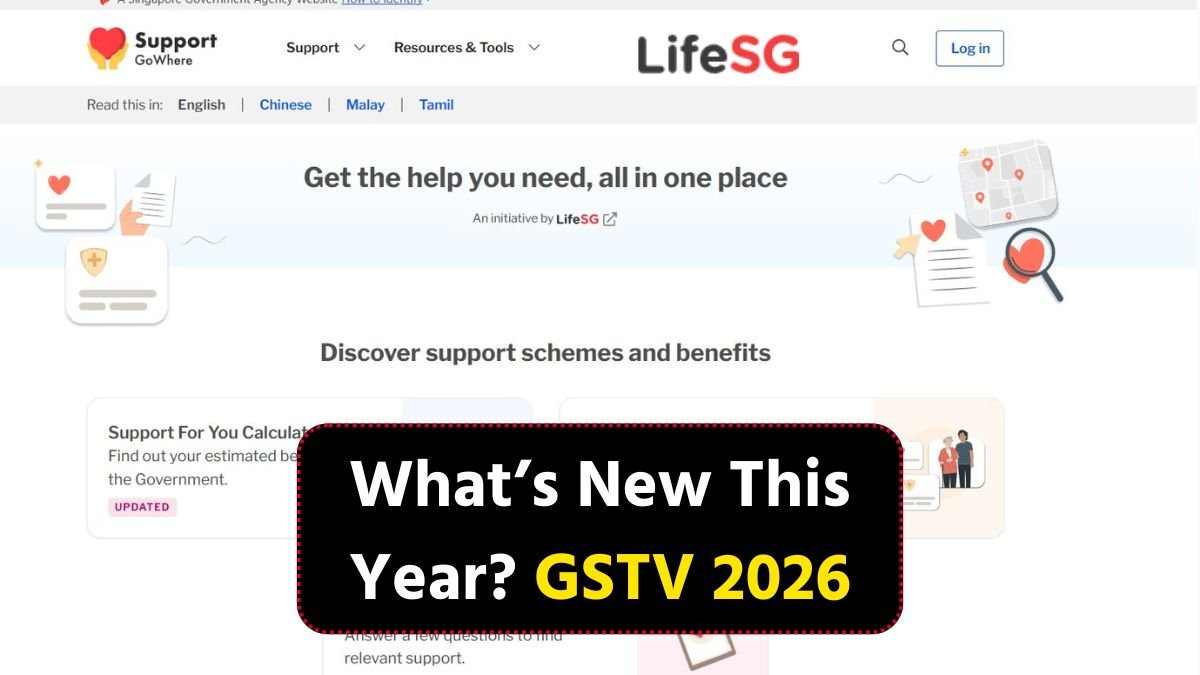
GST Voucher 2026 What’s New This Year?
| Area | GST Voucher 2025 | GST Voucher 2026 (What’s New) |
|---|---|---|
| Cash Payouts | Standard tiered support | Higher tiers for lower-income adults |
| MediSave Top-Ups | Age-based amounts | Enhanced support for older seniors |
| U-Save Rebates | Quarterly rebates | Stronger offset for utilities bills |
| Eligibility | Income & property checks | Refined targeting based on inflation impact |
| Policy Focus | GST hike offset | Broader cost-of-living relief |
Quick Recap: What Is the GST Voucher Scheme?
The GST Voucher (GSTV) Scheme is designed to help lower- and middle-income Singapore citizens cope with GST and rising living costs. Instead of blanket subsidies, it uses income and property ownership to decide who gets more help.
The scheme is reviewed regularly to reflect inflation trends and household pressures — which is why 2026 looks noticeably different from 2025.
The Three Core Components
GSTV – Cash
Direct cash support for eligible adults. This is the most flexible part — usable for food, transport, school expenses, or medical needs.
GSTV – MediSave
CPF MediSave top-ups for seniors to help cover healthcare bills, insurance premiums, and outpatient care.
GSTV – U-Save
Quarterly utilities rebates for HDB households to reduce electricity, water, and gas bills.
GST Voucher 2026: Are Payouts Actually Higher?
GSTV – Cash: More Targeted, Less Spread Thin
For 2026, the focus is not “everyone gets a bit more”. Instead, support is concentrated on groups hit hardest by inflation, including:
- Lower-income working adults
- Seniors who own only one property
- Households spending more on daily essentials
This sharper tiering means some Singaporeans will see higher effective cash payouts compared to 2025, even if others remain unchanged.
Why this matters: cash gives breathing room. No restrictions, no vouchers to juggle. Just money you can use immediately.
GSTV – MediSave: Seniors Get Extra Cushion
Healthcare costs don’t slow down with age — they usually go the other way. In GST Voucher 2026, MediSave top-ups are enhanced for older seniors, helping to cover:
- Outpatient treatments
- Insurance premiums
- Age-related medical needs
For retirees, this reduces out-of-pocket spending and eases long-term healthcare stress.
GSTV – U-Save: Utility Bills Hurt Less
Utilities remain one of the most painful monthly expenses, especially during periods of global energy price swings.
In 2026:
- U-Save rebates continue on a quarterly basis
- Smaller HDB flats receive higher effective offsets
- Lower-income households feel the relief more directly
It won’t erase the bill, but it definitely softens the hit.
Policy Tweaks in GST Voucher 2026 You Should Know
More Precise Eligibility Rules
The core framework stays the same, but income banding is tighter. The aim is simple: reduce leakage to households that don’t need help, and channel more support to those who do.
Multiple property owners remain excluded, and eligibility aligns more closely with real-world living costs.

Part of a Bigger Cost-of-Living Package
GST Voucher 2026 doesn’t stand alone anymore. It works together with:
- Assurance Package payouts
- CDC Vouchers
- Transport and utilities support
The idea is coordinated relief, not random handouts scattered across the year.
Mostly Automatic, No Extra Hassle
If you’re eligible, payouts are automatic. Money goes straight to:
- PayNow-NRIC
- Your bank account
- CPF MediSave
No forms, no annual reapplication, no need to chase updates.
How GST Voucher 2026 Helps in Real Life
For working adults
Helps cover rising food and transport costs without relying on credit cards or loans.
For seniors
Reduces healthcare stress and supports ageing-in-place with lower utilities bills.
For HDB families
Frees up cash every quarter for childcare, school expenses, or household needs.
Think of it as a pressure valve — not a solution to everything, but enough to steady things.
Why GST Voucher 2026 Still Matters
Singapore’s approach is deliberate. Instead of throwing money everywhere, GST Voucher 2026 focuses on fairness and sustainability.
The payouts won’t pay all your bills. But they do:
- Reduce monthly strain
- Improve cash flow timing
- Support households during inflation-heavy periods
For most Singaporeans, that matters more than headline figures.
Frequently Asked Questions
Is GST Voucher 2026 higher than 2025?
Yes — especially for lower-income adults and seniors. The increases are targeted, not uniform.
Do I need to apply again for GST Voucher 2026?
No. If your details are up to date, payouts are automatic.
When will GST Voucher 2026 be paid?
Most cash and MediSave payouts are expected around January 2026, with U-Save rebates credited quarterly.
Sources (Official Singapore Government Websites)
- Ministry of Finance – GST Voucher Scheme: https://www.mof.gov.sg
- GST Voucher Official Site: https://www.gstvoucher.gov.sg
- Inland Revenue Authority of Singapore (IRAS): https://www.iras.gov.sg
- CPF Board (MediSave): https://www.cpf.gov.sg

 Join
Join