
KEY HIGHLIGHTS
- WIS 2026 continues to give lower-income Singaporeans extra cash and CPF support.
- Eligible workers can receive up to S$4,800 a year, depending on age and income.
- For many, this is one of the easiest ways to boost income without applying.
WIS 2026 Singapore workers: Daily expenses in Singapore aren’t getting cheaper. From kopi and hawker meals to public transport, medical bills, and housing costs, many lower-wage workers feel the squeeze every month.
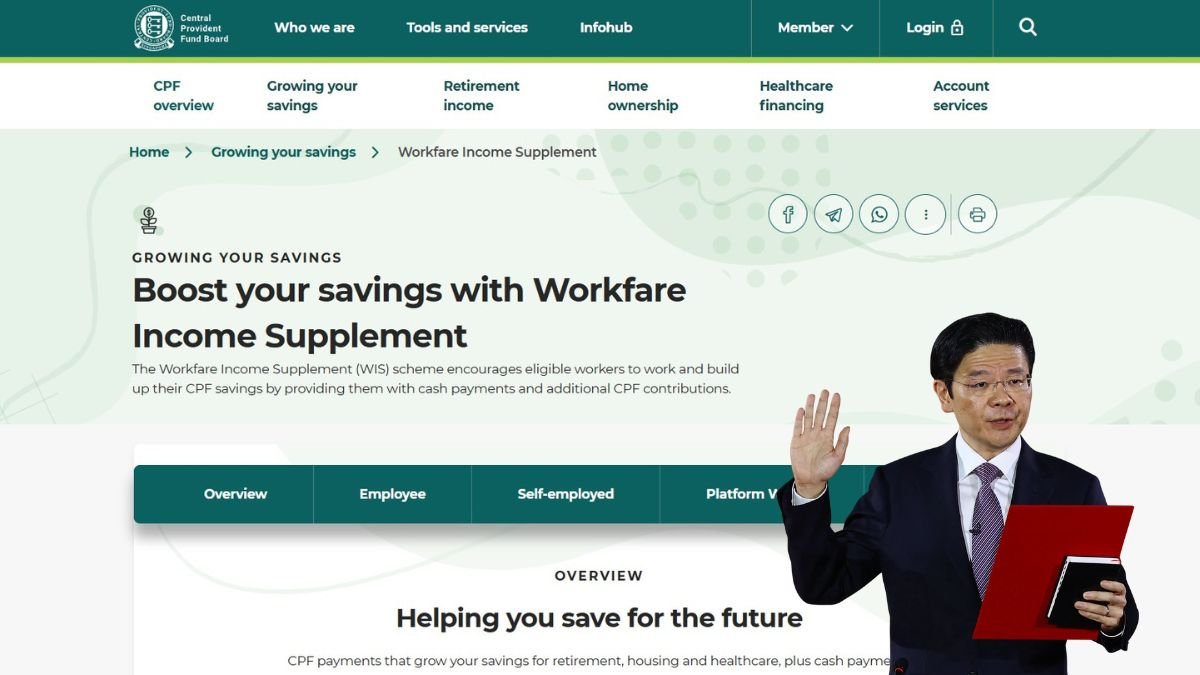
That’s where the Workfare Income Supplement (WIS) continues to matter in 2026. It’s not flashy. It doesn’t come with big announcements. But for eligible workers, it quietly puts real money back into your pocket and CPF — year after year.
The big question most people ask is simple: How much do I actually get, and is it worth caring about?
What Exactly Is the Workfare Income Supplement (WIS)?
WIS is a long-running income support scheme designed specifically for lower-wage Singaporean workers. The idea is straightforward:
You work regularly → the Government tops up your income → part goes to cash, part goes to CPF.
Unlike one-off payouts, WIS rewards consistent employment and helps workers build up retirement and healthcare savings at the same time. Honestly speaking, it’s one of the more practical schemes out there.
What stays relevant for WIS in 2026?
The 2026 structure continues recent improvements, including stronger support for:
- Older workers
- Gig and platform workers
- Self-employed persons (SEPs)
- Automatic assessment for employees (no need to apply)
The system is designed to keep pace with an ageing workforce and changing job patterns.

Who Can Qualify for WIS 2026?
To receive WIS in 2026, you must meet all the following conditions:
- Singapore Citizen
- Age 35 and above, or any age if you’re a person with disabilities
- Average monthly income of S$2,500 or below
- Working as:
- Full-time or part-time employee
- Self-employed person
- Platform or gig worker
- CPF requirements met:
- Employees must have CPF contributions
- SEPs must declare income to IRAS and contribute to Medisave
- Must not own more than one property
If this sounds like you, don’t ignore WIS. Many eligible workers miss out simply because they don’t realise they qualify.
How Much Can You Actually Receive Under WIS 2026?
Here’s where it gets real. The amount you receive depends mainly on age and income level.
Maximum Annual WIS Payouts (Indicative)
| Age Group | Maximum WIS per Year |
|---|---|
| 35–44 | Up to S$2,400 |
| 45–54 | Up to S$3,600 |
| 55–59 | Up to S$4,200 |
| 60 and above | Up to S$4,800 |
Older workers receive higher payouts. This isn’t random — it’s meant to strengthen CPF savings as retirement approaches and encourage staying employed longer.
Cash vs CPF: How WIS Is Paid Out
WIS is not 100% cash, and that’s intentional.
Typically, the payout is split like this:
- About 40% in cash
- About 60% into CPF (Ordinary, Special, and Medisave Accounts)
The cash helps with immediate expenses. The CPF portion quietly grows your retirement and healthcare savings. No need to overthink — it’s a long-term benefit many people underestimate.
Real-Life Examples: What Workers Might Receive
Example 1: Retail Assistant, Age 38
- Monthly income: S$1,800
- Estimated WIS for 2026:
- Total: around S$1,900
- Cash: about S$760
- CPF: about S$1,140
That’s extra support without changing jobs.

Example 2: Cleaner, Age 58
- Monthly income: S$2,000
- Estimated WIS for 2026:
- Total: around S$4,000
- Cash: about S$1,600
- CPF: about S$2,400
For many older workers, this makes a noticeable difference.
Example 3: Delivery Rider (SEP), Age 45
- Declared annual income: S$24,000
- Medisave contributions done
- Estimated WIS:
- Total: about S$2,800
- Mostly CPF, with some cash
This also encourages proper income declaration — which helps in the long run.
When and How Will You Be Paid?
Employees
- Paid quarterly in March, June, September, and December
- Automatically assessed — no application needed
Self-Employed Persons
- Paid once a year
- Must:
- Declare income to IRAS
- Make Medisave contributions
Payments go straight to:
- Your PayNow-NRIC linked bank account, or
- GovCash if you don’t have a registered bank account
Why WIS Is Still One of the Best Support Schemes
From a practical point of view, WIS is high value because:
- No application hassle (for employees)
- No repayment required
- No fees
- Helps both now and in retirement
- Works well together with CPF and wage progression schemes
For most Singaporeans who qualify, skipping WIS is basically leaving money on the table.
How to Maximise Your WIS in 2026
- Make sure CPF contributions are correct
- Declare income on time if you’re self-employed
- Stay employed consistently through the year
- Keep your bank details updated
- Check CPF and IRAS messages — don’t ignore them
Frequently Asked Questions
Is WIS payout taxable in Singapore?
No. WIS is not taxable income, so you don’t need to declare it when filing taxes.

Do part-time or gig workers qualify for WIS 2026?
Yes. As long as income limits and CPF or Medisave conditions are met, part-time and platform workers can qualify.
Can I still receive WIS if I change jobs during the year?
Yes. WIS is calculated based on your total annual income, not how long you stay with one employer.
Is WIS 2026 Worth Paying Attention To?
For eligible workers, WIS in 2026 can mean an extra S$2,000 to almost S$5,000 a year. That’s not small change, especially with today’s living costs.
It won’t replace a salary increase, but it does strengthen both daily cash flow and long-term security. If you qualify, this is one scheme you really shouldn’t ignore.
Sources (Official Singapore Government Websites)
- Ministry of Manpower (MOM) – https://www.mom.gov.sg
- Central Provident Fund (CPF Board) – https://www.cpf.gov.sg
- Inland Revenue Authority of Singapore (IRAS) – https://www.iras.gov.sg
- Singapore Government – https://www.gov.sg

 Join
Join